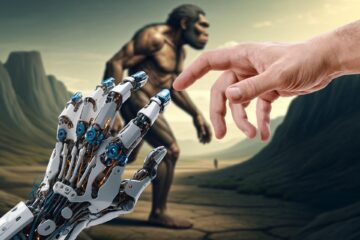
Over the past few months, I’ve noticed an interesting trend: platforms like SourceForge, once vibrant hubs for open-source innovation, are seeing a decline in activity. At the same time, we read daily about the rise of new AI tools — from automated reports to generated code.
It’s a mix of fascination and concern. Because one key question arises:
Where will true innovation come from, if everyone is “building with AI” but fewer and fewer people are doing the foundational work?
We may already be in the early phase of an AI bubble — where productivity surges in the short term, but the deeper substance behind it slowly erodes.
Retreat from the Roots
SourceForge, GitHub, Stack Overflow — these platforms thrived on people contributing, improving, and sharing knowledge. But now, many turn to AI for instant results. Why write or ask questions when the model gives you the answer?
It saves time — but it encourages consumption over creation.
AI recombines what already exists. But if no one continues to build the foundations — tools, frameworks, or new standards — the source material that fuels AI may run dry.
The Looming AI Bubble
“Bubble” is not just hype—it’s appropriate when automation is mistaken for innovation.
Right now, we see:
- Companies cutting innovation teams: “AI will handle it.”
- Projects delivered faster with AI — but without long-term thinking.
- Talented minds reduced to prompt engineers.
But real innovation comes not from speed alone — it takes vision, curiosity, and the courage to build something different. For that, we still need people.
Regulation as a Case Study: Smart Division of Labor
Take banking as an example: analysts spend a lot of time on regulatory tasks (Basel IV, DORA, ESG). Important, but often tedious.
AI can help — contract analysis, automated reporting, intelligent controls. That’s a win — but only if the freed-up time is invested in innovation: new products, data-driven strategies, creative solutions.
In forward-looking firms, machines handle the routine — humans handle the future.
Resilience Requires Both: Automation and Ambition
The best companies of the future will get the mix right:
- AI for standardization and efficiency.
- Humans for creativity and strategic growth.
That means:
- Upskilling instead of deskilling.
- Innovation spaces, not just efficiency programs.
- A culture that values learning, experimentation, and the freedom to fail and try again.
Conclusion – with a timeless quote, reimagined
Maybe the challenge of our time can be summarized like this — a modern take on Reinhold Niebuhr’s well-known words:
“Use artificial intelligence where it is more efficient. Trust human creativity where true innovation is needed. And have the wisdom to know the difference.”
In a world where almost everything seems automatable, discernment becomes the new strategic currency. Companies that match smart automation with empowered human talent won’t just survive the AI era — they’ll lead it.